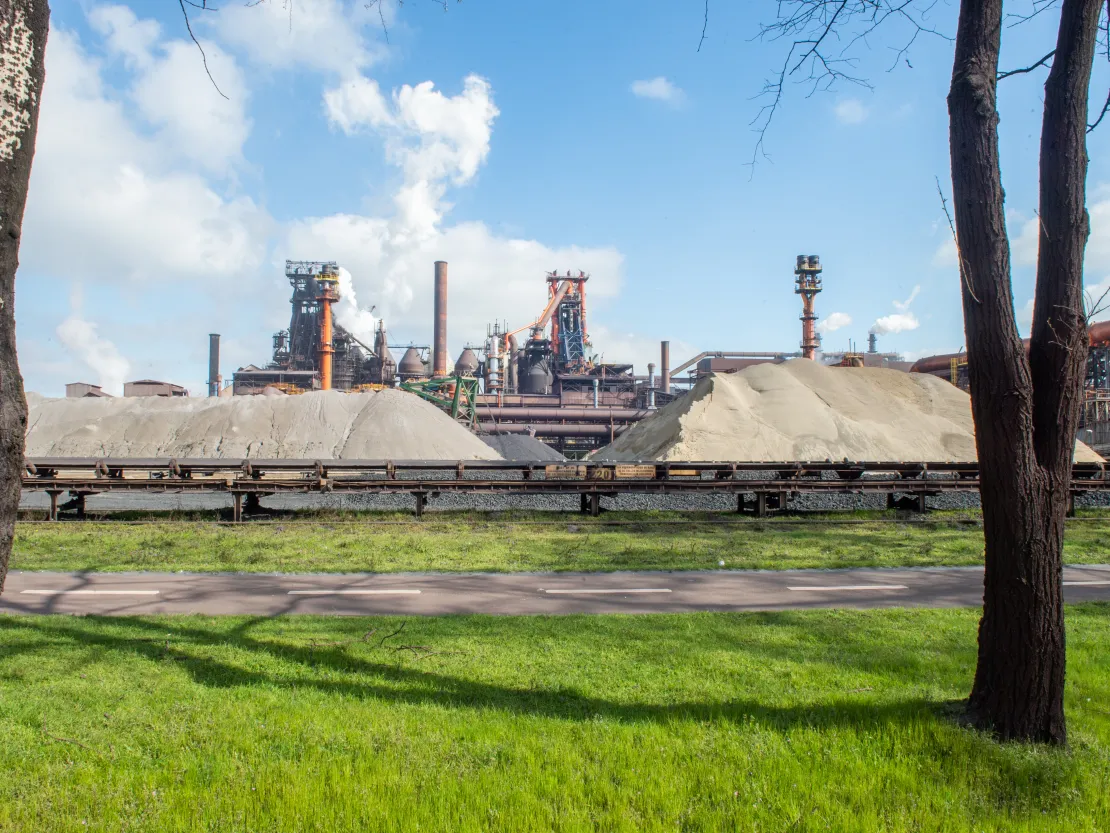
Mid-June 2023 saw the first step toward full operation of a commercial-scale facility that will capture carbon-rich waste gases from steelmaking and biologically convert them into ethanol through LanzaTech’s bio-based process. Unlike traditional fermentation, the process ferments gases instead of sugars and uses a biocatalyst instead of yeast. The facility was inaugurated in December 2022, with cold commissioning taking place thereafter. The biocatalyst has now been introduced into the facility (a process called inoculation) to begin growth and verify production of new molecules.
In May 2023, the first gases from the steel mill’s blast furnace were safely introduced to LanzaTech’s biocatalyst. After a successful inoculation, initial samples containing ethanol were produced, demonstrating that the carbon in the gases is being converted into new chemical products. Commercial-scale ethanol production from the bioreactors will follow, with production expected to ramp up in the coming months. This ethanol can then be used as a building block to produce a variety of products, including sustainable transport fuels, packaging materials, apparel, and even cosmetic fragrances, hence helping to advance the decarbonization efforts of the global chemical sector. The ethanol will be jointly marketed by ArcelorMittal and LanzaTech under the Carbalyst® brand name.
The Steelanol plant has the annual capacity to produce 80 million liters of advanced ethanol, around half of the total current demand in Belgium. It expects to reduce carbon emissions from the Ghent plant by 125,000 tonnes annually, thereby advancing the EU’s 2030 Climate Target Plan to reduce greenhouse gas emissions by 55% by the end of the decade. Project partners include Primetals Technologies and E4tech with support from CINEA, the European Climate, Infrastructure and Environment Executive Agency.
The product samples from the facility mark an important step toward the circular use of carbon and the end of single-use carbon, whereby gases are no longer regarded as waste but as raw materials. In addition, the recycling of carbon means Steelanol’s process of Carbalyst® ethanol production does not compete in any way with food crops, as is the case for traditional methods of ethanol production.
The LanzaTech process implemented at this site is fully flexible: not only can it use industrial gases from today’s steel production methods, but it can also adapt as industry transitions to future steel production technologies with increased green hydrogen input. This versatility enables the carbon recycling application to evolve with available residue, waste streams, and green H2. LanzaTech’s process is already employed by three operational commercial facilities, and LanzaTech anticipates the launch of two additional commercial facilities, in Asia, before the end of the year.
Funding for the commercial Steelanol facility was obtained from various sources, including the Flemish government, the Belgian federal government, and the European Union’s Horizon 2020 research and innovation program under grant agreement No. 656437. Part of the funding was also secured with a loan from the European Investment Bank.